Thursday, January 1, 2015

Happy New Year!

On New Year's Day, in 1908 Ernest Shackleton set out with his men on their ship the Nimrod, for an ambitious expedition (Shackleton admits as much in his journal).  The original plan, as stated in the Geographical Journal (March 1907):
The shore-party of nine or twelve men will winter with sufficient equipment to enable three separate parties to start out in the spring.  One party will go east, and, if possible, across the Barrier to the new land known as King Edward VII Land, follow the coast-line there south, if the coast trends south, or north if north, returning when it is considered necessary to do so.  The second party will proceed south over the same route as that of the southern sledge-party of the Discovery; this party will keep from fifteen to twenty miles from the coast, so as to avoid any rough ice.  The third party will possibly proceed westward over the mountains, and, instead of crossing in a line due west, will strike towards the magnetic Pole. ... I do not intend to sacrifice the scientific utility of the expedition to a mere record-breaking journey, but say frankly, all the same, that one of my great efforts will be to reach the southern geographical Pole.
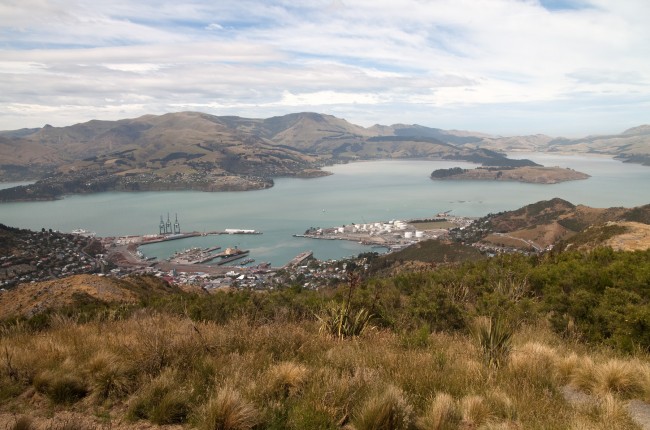
Present-day Lyttleton. Photo credit: Dan Sutterfield
By March 9 of that year they had ascended Mount Erebus, the active volcano on Ross Island, and taken the first geologic samples.  They did traverse to around 100 miles from the geographic pole, which was the farthest south achieved at that time.  Part of their party also made it to the magnetic pole.  Sounds like a pretty successful season to me!  The exploring community at the time thought so too, though the Royal Geographical Society dragged its feet a bit before awarding him a medal.  I'm finding Shackleton's expedition journal, The Heart of the Antarctic, a fascinating read.


Lyttelton in 1955.  Photo credit: Dave Grisez, NSF
Lyttelton has served as a jumping off point for many subsequent Antarctic expeditions, including the ships carrying goods to set up research stations in the first year of the US Antarctic Program's Operation Deep Freeze in 1955.   The following bases were established: Byrd, South Pole, Wilkes, Ellsworth and Hallett.  Williams Field, onto which I flew last week (see 12/25/14 post), was also built in 1955, making the first flights to Antarctica from another continent possible.

People gather in Lyttleton to see the ship off to Antarctica in 1955.  Photo credit: Dave Grisez, NSF
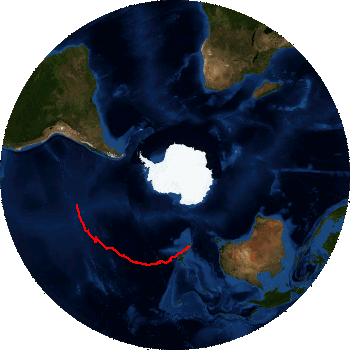
Path of a long-duration balloon
launched earlier this season.


There is another exciting event to report this New Year's Day.  A NASA group launched a balloon from McMurdo.  Untethered, the wind will carry it for days or weeks until it falls back to the ice surface.  The scientists exploit circulation patterns in the summer which might bring it full circle, close to its launch point.  According to NASA's website, "These balloon flights carry the balloons and their instruments at the edge of space and are used to investigate the nature of ultra-high-energy cosmic rays and search for anti-matter, as air currents that circle Antaratica."

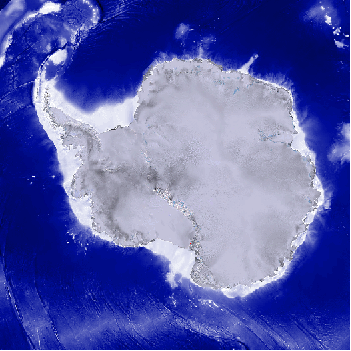
SPIDER launched 1/1/15


SPIDER path


Payload position as of:21:02:47Z 01/01/15Latitude: 78°45.92 SLongitude: 160°55.39 EAltitude: 120030 Feet17.00 Knots @ 245.00°

During the last week I have been thoroughly brought up to speed through many briefings and trainings. The Antarctic Field Safety course is a refresher course that covers some of the outdoor skills I learned last year in the Happy Camper course.  Although it doesn't involve camping outside, we did have a trial run using the Whisperlight stoves, setting up all of the possible mountain tents that we may be issued, and practicing our knots.  As part of this training we were shown a powerpoint on cold weather injuries which contained a lot of useful information as well as some grisly photos of extremities to motivate you to avoid these injuries.  The Fire Safety course was particularly important because the dry climate and strong winds can cause fires to spread rapidly.  There were also many reminders of the unique recycling system used here to minimize the amount of garbage we need to send back to California on the ship.
My office in Crary Labs

Most of my time has been spent in my office in Crary Labs, but I have gotten the chance to do a few hikes these past couple days.  A crack in the sea ice has developed where seals and penguins are emerging for a rest on land.  The weather has been lovely the past couple days: just a few degrees below freezing, clear skies, only a light breeze.

Perhaps the most exciting bit of news for me is that five of the scientists on our team made it out to the field site today.  I hope to follow them with the rest of our team in a few days.  Let's hope the nice weather holds!


Me and McMurdo Station.  Hut Point is the promontory on the far left.
Halfway up Observation Hill (I did hike up the rest of the way)
The crack in sea ice from Hut Point.  Black dots are seals.
Weddell seals and Adelie penguins
Me and Mount Erebus, smoking away


Thursday, December 25, 2014

Merry Christmas from the bottom of the world


We flew into Williams Field and took the ski road (pictured)
into McMurdo.  Pegasus is another airfield.  The shelf break,
where the ice shelf ends, can be seen as a ridge above.  The
sea ice is to the left of the shelf break and surrounds Ross Island,
on which McMurdo is located, until later this summer.
We arrived in McMurdo at six in the evening on Christmas Eve.  White light was reflected in all directions as we got off the plane.  It was only lightly snowing but you couldn't tell ground from sky. The effect was lost once we got into town and had brown dirt under our feet.

We went directly to an orientation at the National Science Foundation (NSF) chalet.  The NSF is the governmental agency that funds the scientific research that Americans do in Antarctica.  The station manager, Terry Melton, spoke with us about rules and regulations pertaining to the US Antarctic Program under the Antarctic Treaty System, as well as best practices that they have developed to stay safe, reduce waste, and protect the environment.  I then received the binder which is to be my bible while I'm here (see below) from Julie Raine, our implementer and employee of the Antarctic Support Contract.

From there I went to pick up my laundry, which is issued in big blue bags to match the big blue building which is home to the short-term residents (that's me!), the galley (cafeteria), general store, craft room, weights room - the list goes on.  I made several trips to and from the blue building as I went to retrieve my luggage, overheating in my thick red parka.  I was assigned an interior room, the down-side and up-side of which is there is no natural lighting.  I always prefer a window, even though it means that you need to wear an eye mask to achieve darkness when it is time to sleep.   I have two roommates, both of whom have been waiting for ten days to get out to their field camp, WAIS Divide, located where the West Antarctic Ice Sheet (WAIS) divides into roughly north-flowing ice streams and south-flowing ice streams.


The Vehicle Maintenance Facility throws a Christmas party every year.  They empty out the warehouse and decorate it with lots of backdrops, including cutouts of tin soldiers and reindeer, seating for both Santa and the Grinch, and blow-up penguins and, puzzling enough, a gargoyle too.

A choir sings carols at the VMF Christmas party
Carolyn (head) and Diana (bottom) 


A little incongruous

 Christmas dinner is quite a production - served in four shifts which you must sign up for beforehand.  People started lining up 45 minutes before their shift, and I joined them to help reserve tables for our WISSARD group.  The meal was fantastic, and drew a standing ovation.  Here's a few of the things that ended up on my plates:
Potato pancakes with spiced applesauce
Shrimp and clams
Spinach artichoke dip
Baked gouda
Blue cheese ball
Almond carrots
Butternut squash with candied walnuts
White chocolate cheesecake
Grasshopper pie
Our meal schedule for the next few days, posted on the USAP intranet
I'm thinking of all of my family and friends today and hoping that you all have a wonderful holiday season!  Thanks for all of your loving support throughout the year.

Wednesday, December 24, 2014

This WISSARD flies south

After months of preparations, I am headed south for another season of drilling with the WISSARD project!  For those of you that didn't follow my blog last year, I am Carolyn, a graduate student at University of California, Santa Cruz (henceforth, UCSC), who is studying the dynamics of large ice sheets.  You can read about the WISSARD project more generally here and about me here.  The goal of this season is to drill into the grounding zone of the Whillans Ice Stream, where the ice goes afloat over sea water.  As we have done in the past two years, we will be utilizing hot water drilling technology, essentially melting a rather narrow hole through the ice.  We will be assessing ice stream stability, that is, the ice's response to internal changes and oceanographic changes.  A suite of borehole instruments and water and sediment samples will provide key observations to make this assessment.  Earth scientists have been using ice sheet models coupled to climate models to assess how ice will respond to climate changes.  Our observations at the ice-ocean interface will help the community improve upon these models by providing a point for comparison.   Here's some of what we've been up to lately to get ready:

July and August:
Dan Sampson and Eli Morris, UCSC engineers, and Slawek Tulaczyk and I, UCSC scientists, work on the assembly of instrument strings to lower down the borehole.

September:
Robin Bolsey, the engineer who designed our sediment corer, visits UCSC to train me on how to use it in the field.  We send off our first shipment of equipment by boat from Port Hueneme, CA.


October: 
We send off our second shipment by air from Port Hueneme.  This contains the datalogger and satellite transmitter that our engineers have been working to test and program as well as the rest of our equipment.


November:
Andy Fisher shows Slawek and I how to use the geothermal probe that he has worked to design and implement.  The WISSARD team deployed the geothermal probe last year and got the first measurement of geothermal heat flux on the Antarctic continent.  We are hoping to get the second measurement this year.

A traverse team leaves McMurdo Station for our remote field site.  They travel for 11 days across the ice on tractors pulling equipment and fuel.  They will prepare our site for drilling, moving supplies and lab units from the Subglacial Lake Whillans drill site of two years prior to our new drill site at the grounding zone.

I also celebrate the Thanksgiving holiday with my family, as I will be spending Christmas in Antarctica.  We even bake Christmas cookies and open presents almost a whole month early.

December:
I attend the first couple days of the American Geophysical Union fall meeting, a conference attended by nearly 24,000 Earth scientists, educators and policy makers.  I got a chance to chat with some really fantastic scientists before heading home to do my final packing.  Here's what I ended up bringing:
1 suitcase of sensitive instruments and a toughbook computer
1 duffel of clothes, boots, sneakers, toiletries, and a small Christmas gift
1 duffel with camping gear that I hope to use in New Zealand following my fieldwork
1 backpack with books, laptop, movies, and snacks

On December 19 I boarded a plane in San Jose.  Two days, two novels, much waiting, and many fits of sleep later, I arrived in Christchurch, New Zealand.  I wasn't able to see much improvement in the downtown area from last year to now.  There are still so many boarded-up and fenced-off buildings as well as empty gravel lots.  The street art, however, brings some color and cheerfulness to an otherwise grim and near-apocalyptic cityscape.

One of my favorite murals in the city - the penguins melt as the ice does
About a dozen of us headed down to the ice went to get our cold weather gear from the Clothing Distribution Center (see my post from last year).  I was pleased to find that several of my items were new - the fleece still has that lovely texture it loses on its first wash.

Our flight was delayed by a day so some of the WISSARD team members and I made our way over the hills to Lyttleton, Christchurch's port town.  We took the scenic route over the hill on the way there and the much shorter tunnel pass (highway 74) on the way back.


Christmas eve: After a brief delay to make a repair, we take off on the Mighty Hercules (LC-130).  With a brisk wind at our back, we're optimistic that we'll have a smooth flight.


Sunday, February 23, 2014

Goodbye, Antarctica

23 February 2013
Santa Cruz, California

Well, our lab group is now all back in California.  Things got a bit hectic back in McMurdo but I will try to do a quick recap of our exit from Antarctica.  After drilling the final hole, we traversed back to CReSIS camp, where they have a groomed runway.  Because the plane to take us back to McMurdo was rather small, as you can see below, we kept some of our gear out in the field to be used next year when we return (fingers crossed!).
 
The Basler and
(back row) Grace, Dan, Slawek, Susan, Julie
(front row) Me, Neil, Matt

The views from the plane were stunning.


When we got back to McMurdo the sea ice had largely disappeared. One felt so much more in touch with the world with the ocean lapping at the shores of the town.  The vessel, which comes once at the end of the summer to resupply the station for the winter, arrived and 100 people came down to help with the off-loading and on-loading of the ship.  A good portion of the station was also restricted-access so that the process would be most efficient.


Adelie penguin


The best part about the open water was access to wildlife.  For the past five weeks we saw one bird, but now we could see penguins, seals and orca whales. 
The water looks so blue because the floor is ice

Weddell seal


We were able to wrap things up in McMurdo fairly quickly.  Unfortunately we weren't able to get Neil on our flight out of the field and then some weather delays pushed his flight back to a week after ours.  Both Neil and I took two weeks in New Zealand to re-acclimate.  What a contrast with the white desert it was.  We were surprised to encounter almost as much isolation on the hiking trails as we did in Antarctica. 


Well, now it's back to sitting in front of a computer screen.  What diverse experiences grad school has offered so far.  All in the name of science... and because we find it fun.

Thursday, January 30, 2014

Loneliest gas station

Refueling at what Neil likes to call
"The loneliest gas station in the world"

Saturday, January 25, 2014

continuous GPS unit and Matt

It was a windy day servicing seismic instruments. Here's Grace and I
hunkering behind a skidoo, snow blowing around us.